Can I make a virtual tour without coding?
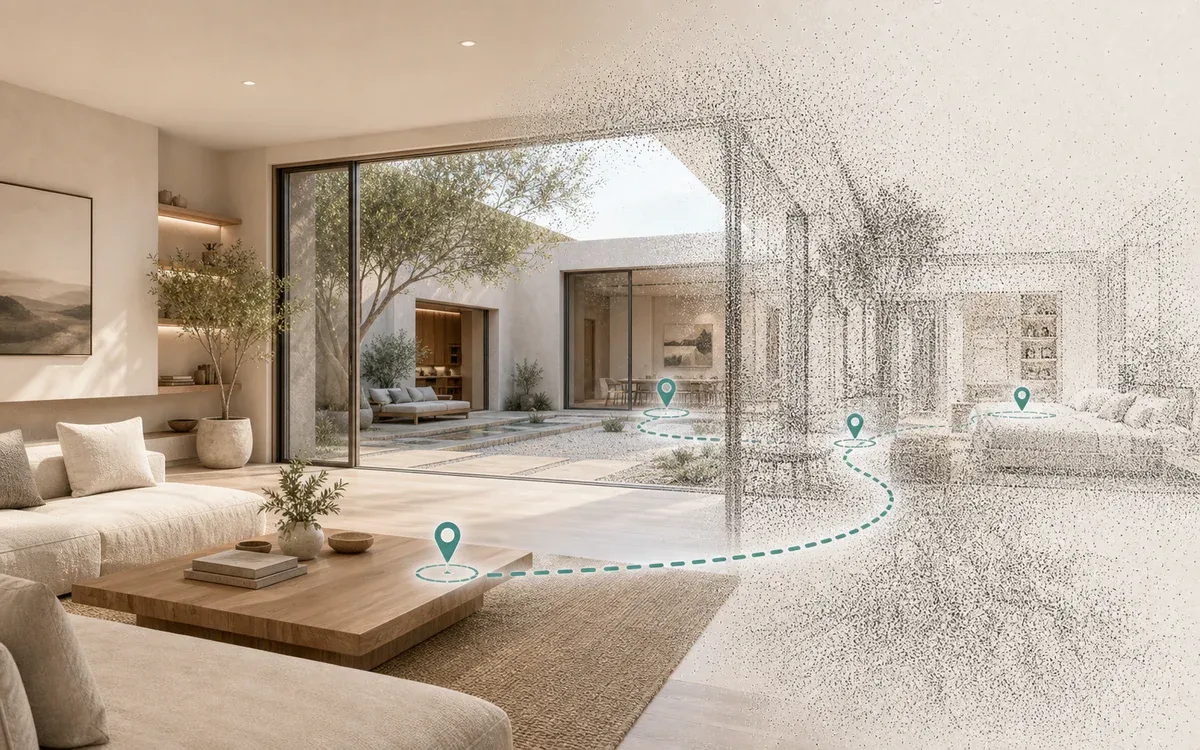
Yes. Spatial Studio by Real Horizons provides a browser editor for combining Gaussian splats, 360 panoramas, floor plans, maps, and media. Upload capture material for cloud generation or import an existing splat, review the result, add hotspots and saved views, then publish a hosted link. Embedding uses an iframe snippet; your website must allow embeds.
What is Gaussian splatting, and why use it for virtual tours?
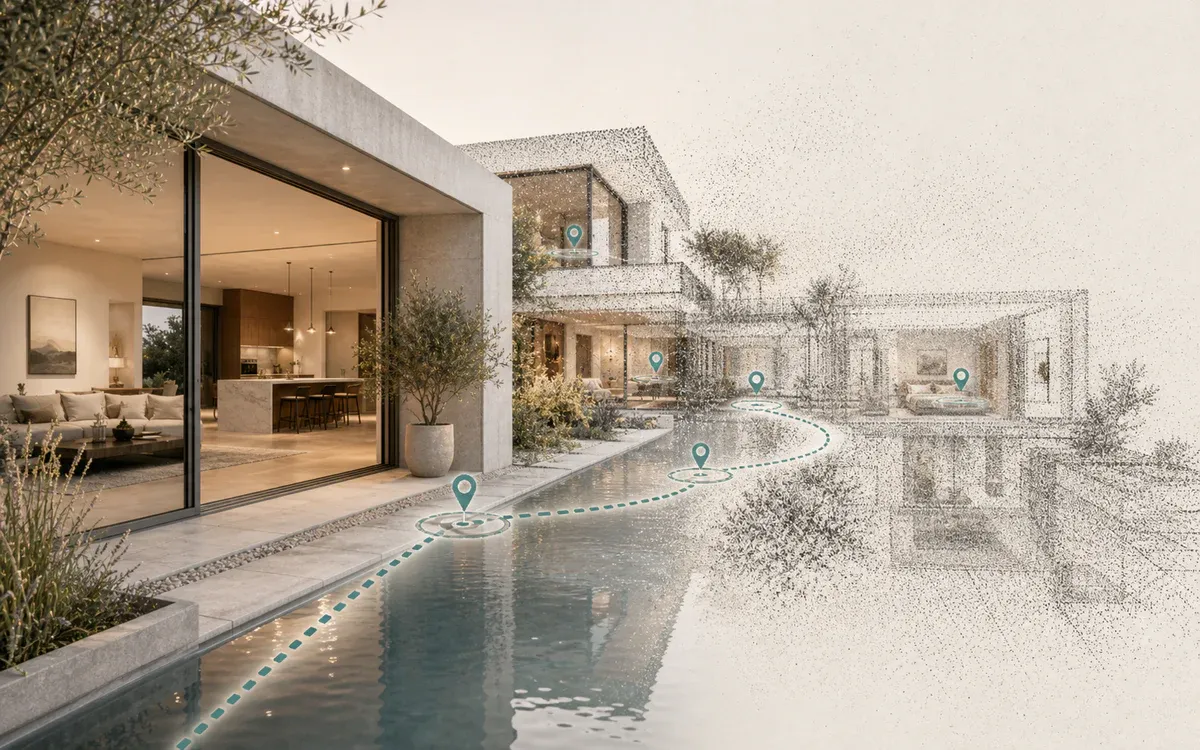
Gaussian splatting reconstructs an explorable scene from overlapping photos or video. It can preserve detailed appearance and view-dependent effects. Capture quality still matters: glass, movement and missing coverage can create artifacts that need review before publishing.
How is Spatial Studio different from Matterport?
Spatial Studio is a browser-based 3D tour platform built around Gaussian splatting rather than fixed panorama nodes. You can capture with an iPhone, a 360 camera, a drone, DSLR, or XGRIDS, generate a splat in the cloud or on a Mac, then author hotspots, floor plans, 3D maps, and AI Reframe views in one workspace. Test the capture, editing and publishing steps against your client requirements.
What can I use to capture a space?
Start with Spatial Lens guided capture on iPhone, a 360 camera, drone footage, DSLR image sequences, XGRIDS PortalCam, or an existing Gaussian splat file. Smaller scenes can be trained locally on a Mac; larger captures generate in the cloud with selectable quality, metric scale, and streaming LOD.
Can I add floor plans, measurements, and hotspots to a tour?
Yes. The Studio editor combines 3D splats, 360 panoramas, Google 3D Maps, media galleries, floor plans, and property overlays on one canvas, with hotspots, portals, saved views, labels, measurements, and interior walk mode with collision authoring.
Who is Spatial Studio built for?
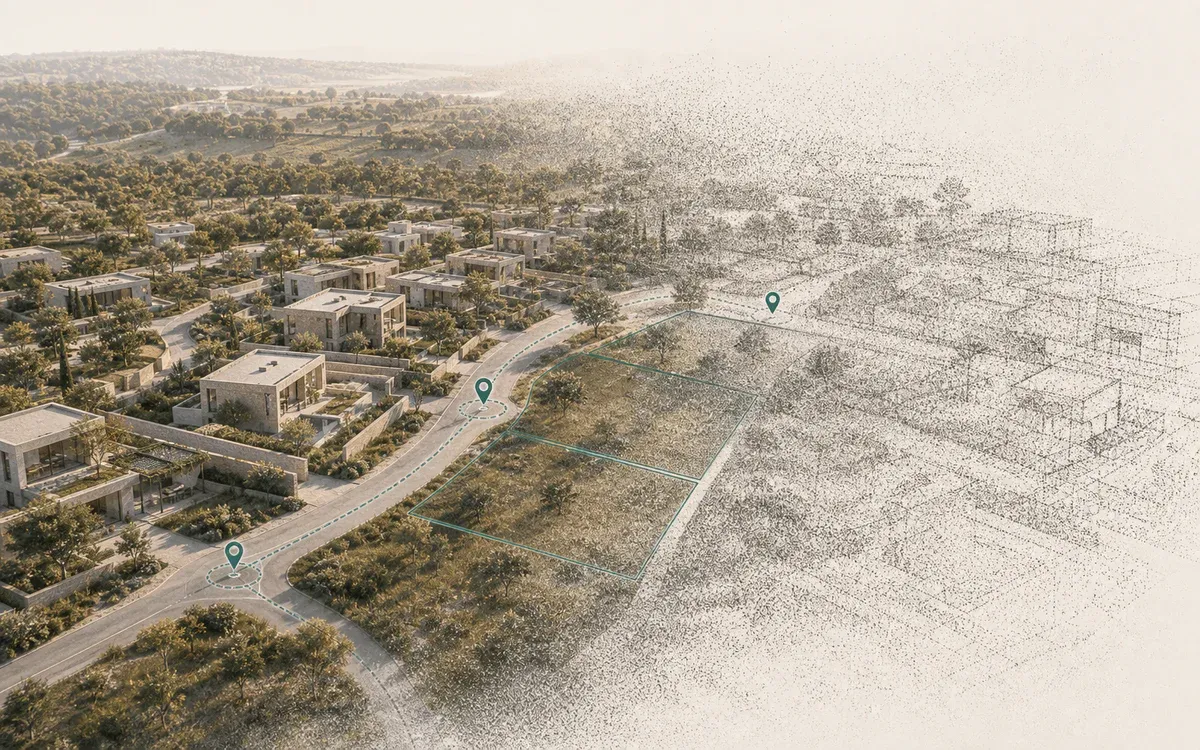
Real estate photographers delivering listing media packages, property developers building interactive land sales and plot pages, and brokerages and luxury listing teams creating seller pitches and guided buyer previews. The same authoring tools can also support venue, heritage and site-documentation projects.
How do I publish, embed, and track a 3D virtual tour?
Preview on desktop and mobile, publish a stable version, and share one hosted link or embed the tour on a listing page. Published snapshots stay stable while you keep editing drafts, and built-in analytics track views, sessions, CTA clicks, and interaction patterns.
Can I download the splat as well as share a tour?
Generated splats have SOG, SPZ, PLY, and compressed PLY download options, plus experimental GLB. Large outputs may exceed the browser conversion limit; SOG is the recommended download. These are scene files. A downloaded splat does not include the complete hosted tour, its hotspots, embeds, or analytics.
What should I check before delivering a client tour?
Check capture artifacts, the opening view, navigation, client branding, CTA destinations, and the actual website embed on desktop and phone. Agree who maintains the project, how long it stays published, and where the source files are kept.